Most snow removal sites will tell you your roof is about to come down. For a code-compliant Twin Cities house that is very unlikely to be true, and saying otherwise sells the wrong service. The real reason to get snow off a roof here is ice dams.
Minnesota Administrative Rules put the design roof snow load for the Twin Cities metro at 35 psf, derived from a 50 psf ground snow load. A local home inspector who actually went and measured found undisturbed snow on roofs at under 15 psf — meaning it would take more than two feet of light snow to approach the design limit on a house built to code.
That does not make roof snow harmless. It makes the reason to remove it different. Snow sitting on a roof melts from below where the attic is warm, runs down to the cold overhang, and refreezes at the eave. The resulting dam holds meltwater behind it until it backs up under the shingles and into the wall and ceiling. That is what damages houses here, and it is a water problem rather than a weight problem.
⚠️ One safety point that is not marketing: do not walk on your roof to remove snow. A snow-covered pitched roof in January is among the more dangerous places on a residential property.
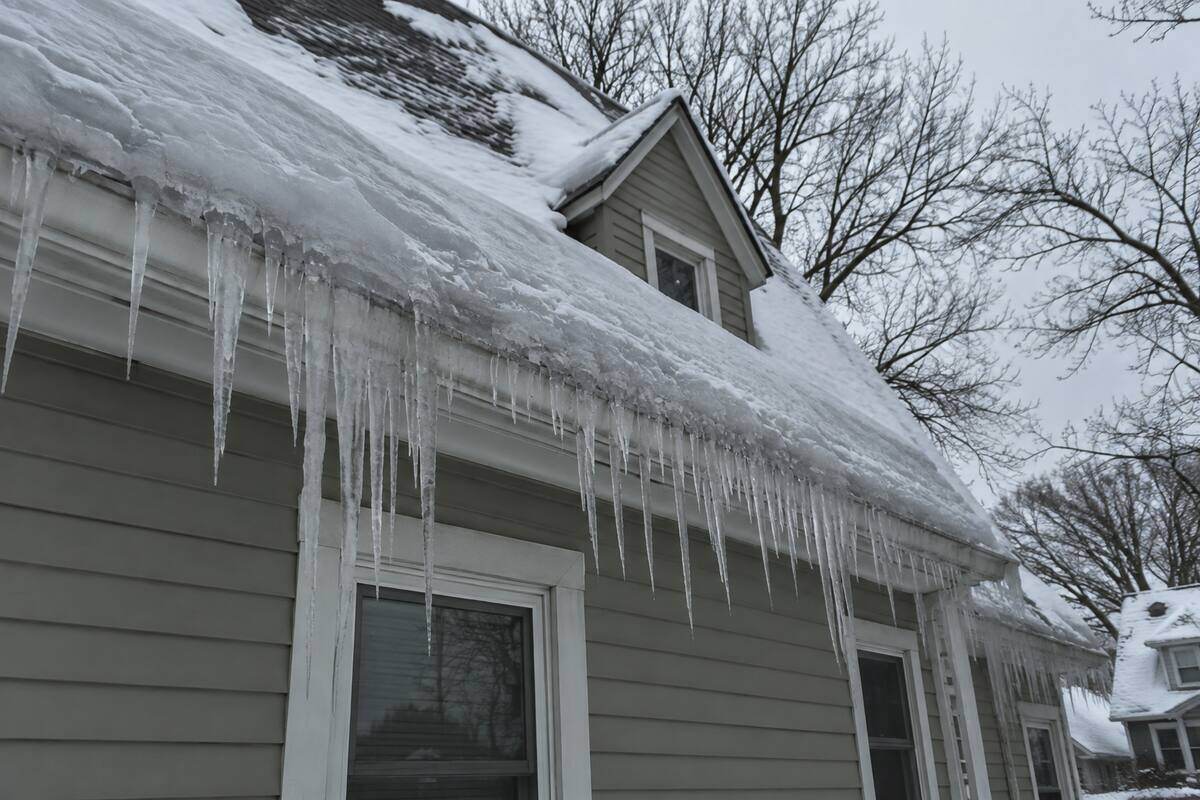
Ice dams are enough of a problem here that multiple metro companies do nothing else. Steam is the professional standard — low-pressure steam melts the dam without stripping granules off the shingles, which is exactly what chipping and high-pressure washing do.
That $400 to $700 single-eave bungalow tier describes the pre-1940 housing stock in Longfellow, Nokomis, Macalester-Groveland and Highland Park with some precision: modest eave runs, a simple roof line, and an attic that was insulated decades after it was built. Those are also the neighborhoods with alleys, rear garages and two-frontage corner lots. One house, four different line items across a winter.
Most Minnesota homeowner policies treat ice dam removal as a maintenance expense rather than a covered loss, while the resulting interior water damage generally is covered. Some policies carry a rider for removal capped around $500 to $1,500.
The practical consequence is an unfortunate incentive: waiting until there is ceiling damage converts an uncovered $1,200 expense into a covered claim plus an uncovered $1,200 expense plus a deductible plus a repaired ceiling. Check your own policy for a removal rider before you need it — it is a two-minute question to your agent in November.
Give the roof type, roughly where the ice is forming, and whether there is any staining inside. That is enough for a real estimate.
Call (612) 712-4640 Get a Seasonal Quote Twin Cities