A plow pushes snow into a pile. A blower throws it away from the surface entirely. They produce different results on the same driveway, and the right one depends mostly on where the snow is allowed to end up.
Fast, efficient on a long or wide driveway, and the standard for a truck-based route. It creates a pile at the end of the push, which needs somewhere to go — and on a narrow city lot with a sidewalk and a boulevard, the options run out sooner than people expect. A plow also leaves a thin layer rather than bare pavement.
Throws snow clear rather than piling it, which is the answer on a constrained lot, a short city driveway, or anywhere the pile would block a sightline. Slower and more labor-intensive per square foot, so usually priced accordingly. Better on walks, steps and aprons than any blade.
Most real jobs use both: a blade on the driveway, a blower or shovel on the walk and steps. That combination is what a seasonal quote is usually describing, and why walkway work is frequently a separate line item at $25 to $60 a visit.
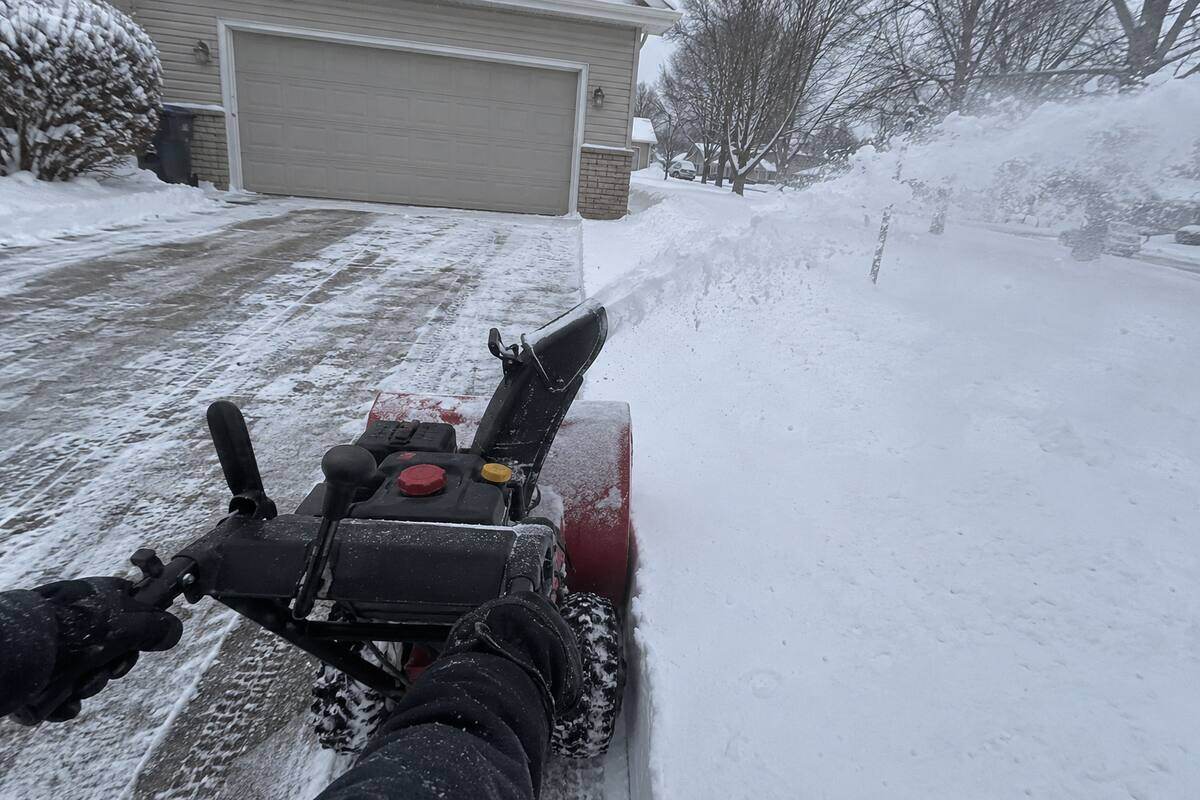
One thing neither method solves: the berm the city plow leaves across your apron after the street is cleared. Whether a return pass for that is in the contract is a question for October. The free mitigation, published by Minneapolis, Saint Paul and Plymouth, is to pile your own shoveled snow on the left side of the driveway as you face the street — though note that Chanhassen publishes the opposite advice, because it depends which way the plow runs. Follow your own city's.
Describe the driveway surface, its length, and where snow has gone in past winters. That answers it.
Call (612) 712-4640 Get a Seasonal Quote Twin Cities