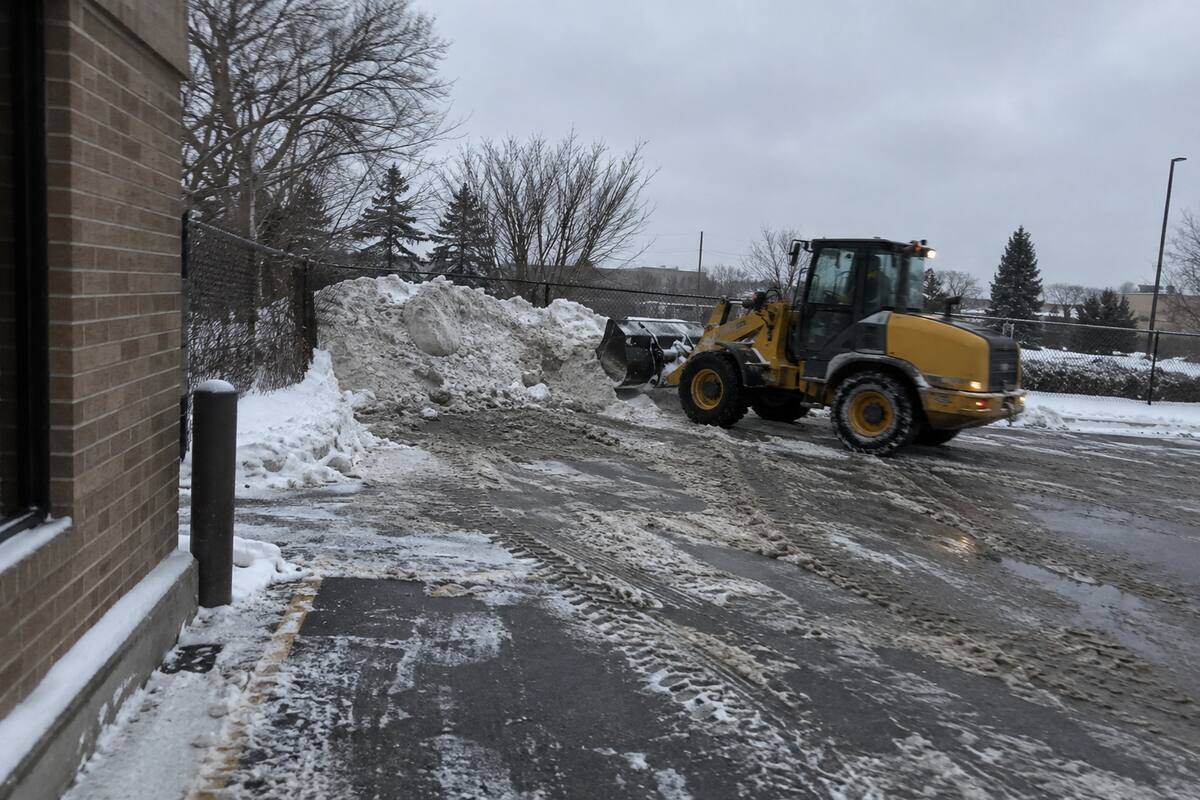
Plowing moves snow to the edge of a property. Hauling takes it off the property entirely. On a constrained lot the first stops working around February, and then you need the second.
The metro's 1991–2020 snowfall normal is 51.2 inches, and most properties can absorb that on boulevards and lot edges. February 2019 brought 39 inches in a single month, beating the previous record by more than a foot. The snowiest season on record, 1983–84, brought 98.6 inches. Those are the winters when stacking space becomes the binding constraint rather than truck time.
The warning signs are specific: banks high enough to block sightlines at a driveway or drive aisle, lost parking stalls along the perimeter, piles encroaching on drive lanes or accessible routes, and meltwater from a large pile refreezing across pavement during a thaw.
Shakopee is the only city in this metro to publish a downtown snow hauling priority in its own operations — tier E in its five-tier system. A 19th-century main street simply has nowhere to put it, which is exactly the situation a constrained commercial property is in.
No Twin Cities operator publishes hauling rates, and this site does not invent a range. The number comes from a site visit. What can be said is that hauling is almost always billed separately from a seasonal plowing contract — so if your property has run out of room in past winters, ask how it is handled before the season rather than negotiating it in February.
Where snow may legally go is not unlimited. Snow deposited on a street is a misdemeanor under Minn. Stat. § 169.42, and West St. Paul publishes penalties up to $1,000 for it. Hauling exists partly because the legal alternatives run out.
Lot size, where the piles are now, and whether a loader can reach them. That is enough to scope a haul.
Call (612) 712-4640 Get a Seasonal Quote Twin Cities